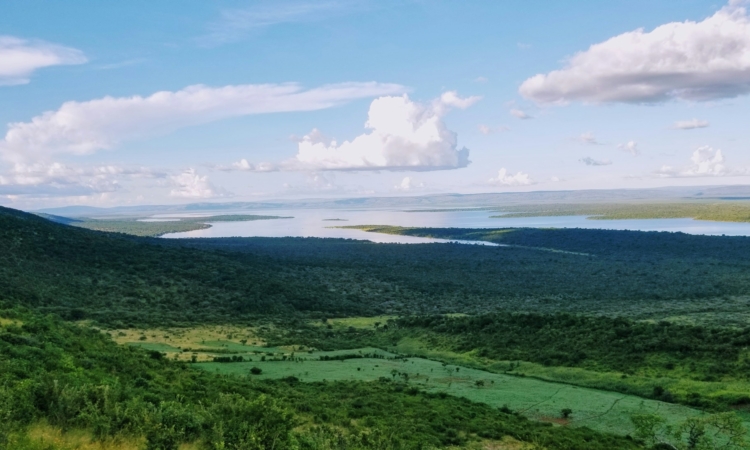
The Mighty Akagera National Park was established by the Belgian government, who occupied Rwanda at that time.
The park, renowned for its biodiversity, still boasts a wide range of wildlife, including birds such as the Gray Crowned Crane, Marabou Stork, African Hornbill, Lilac-breasted Roller, African Fish Eagle, African Jacana, Fork-tailed Drongo, Hamerkop, Great Cormorant, Bare-faced Go-away-bird, Saddle-billed Stork, Great Egret, Pin-tailed Whydah, Brown-chested Lapwing, White-browed Coucal, Denham’s Bustard, African Darter, Laughing Dove, Goliath Heron, Osprey, Amur Falcon, Blue-shouldered Robin-chat, Booted Eagle, among others.
Other species found in the park include bushbucks, topis, oribis, waterbucks, roan antelopes, klipspringers, impalas, hyenas, giraffes, lions, leopards, buffaloes, elephants, zebras, snakes, monkeys, and more.
Attractions at the Park
- Water Bodies: The park is dotted with swamp-fringed lakes, including Lake Ihema, Lake Shakani, Lake Rwanyakazinga, and Lake Shanju, to name a few. These water bodies provide feeding grounds for various bird species and other wildlife. Here, you may catch a glimpse of rare species, along with hippos and crocodiles in the water. It’s advisable to keep a safe distance from water bodies to avoid attacks from aquatic species and predators. Tourists must wear life jackets if they opt for boat trips or sport fishing.
- Birds: Akagera National Park is home to over 500 bird species, including Zambezian biome species like Myrmecocichla arnotti, Cisticola angusticauda, and palearctic migrants such as Falco and Glareola. Among the resident birds are the shoebill, cattle egret, fish eagles, Augur Buzzard, Long-crested Eagle, Black-headed Weavers, Vieillot’s Black Weavers, Grey-backed Fiscals, Fan-tailed Widowbirds, and Carruther’s Cisticola. Bird enthusiasts flock to the park to capture photographs during both day and night. You can choose to book a private or public campsite, depending on your budget.
Activities at the Park
- Game Drives: Game drives are a must-do activity for tourists visiting Africa, offering a safe way to view wildlife. Guests travel in 4×4 open-roof safari vehicles, exploring areas where animals are likely to be spotted. Guides often track animal footprints or follow birds’ movements to locate wildlife. During the dry season, drives frequently lead to water sources where animals gather to drink. Drives are scheduled for the morning or evening, accommodating early risers and those who prefer a later start.
- Fishing: Many tourists engage in sport fishing, using traditional methods like arrows, baskets, and nets. This activity is a fantastic opportunity for taking unique photos, and it also supports the local economy, as fish like Nile perch, tilapia, and silverfish are caught for sale.
- Camping: Camping is another popular activity, especially at public campsites where tents are provided. Visitors are encouraged to bring their own bedding, or they can request bed covers and mattresses from the park. Campfires are lit to provide warmth and deter wildlife that fears light. However, it’s important to note that fire does not deter lions—only unstable LED bulbs can. If faced with an animal, it’s advised not to crouch but to throw objects in various directions and back away while maintaining eye contact. Avoid urinating near campsites, as some animals are attracted by the scent. Always ask a tour guide to accompany you to a safe area.
- Nature Walks: Nature walks require a level of physical readiness, as visitors walk through the park with only the guidance and protection of a tour guide, unlike the more comfortable and safe game drives.
Accommodation – Where to Stay in Akagera
Akagera National Park offers well-equipped accommodations with experienced staff, ample parking, relaxing gardens, and restaurants serving delicious meals.
Available campsites include Shakani Campsite on the shores of Lake Shakani, Mutumba Campsite, and Muyumba Campsite near the Kayonza park entrance.
There are also lodges like Akagera Game Lodge, Ruzizi Tented Lodge, and more.
Getting to the Park
Tourists can reach Akagera National Park by road, usually in a car provided by the tour company or arranged from Rwanda’s capital, Kigali.
If arriving in the evening, guests may spend the night at a hotel in Kigali before resuming their journey the next day, often making stops in local villages to interact with locals and purchase snacks and crafts.
The park is located 135 km from Kigali, a 2-3 hour drive, or one hour from Rwamagana.
Tourists can also opt for air travel, with helicopters available for those with a luxury budget, as there are no domestic flights directly to the park. The helicopter journey takes only 22 minutes to reach Akagera.
To enter the park, visitors must pay an entrance fee, with rates varying based on residency status.
Foreigners who are residents and those who are non-residents pay in US dollars, while East African citizens pay in their local currency.
Akagera is ready to showcase its wonders. Visit now before the sun sets and experience the beauty and diversity of this remarkable park!