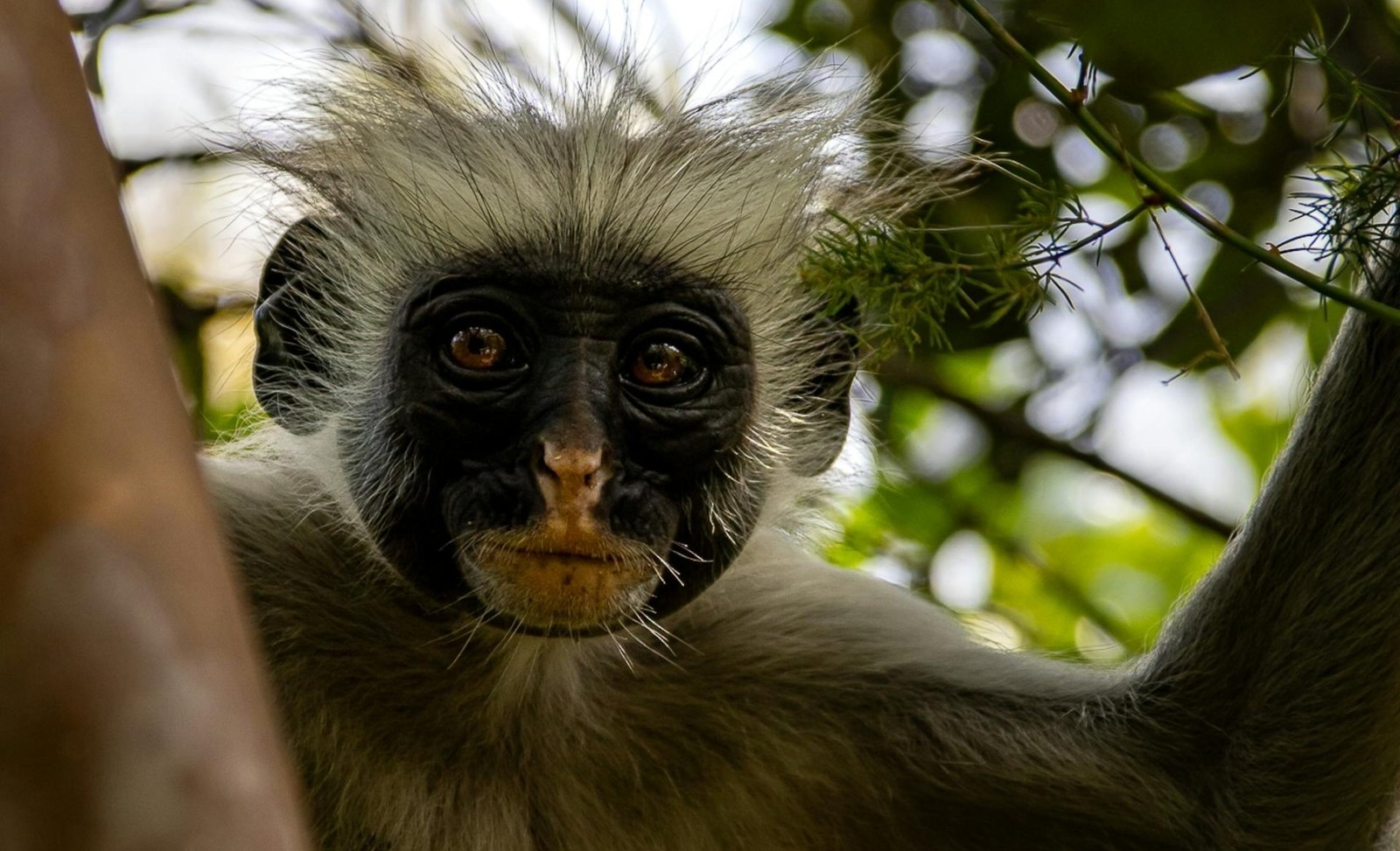
Zanzibar National Parks – Jozani Chwaka Bay National Park is the only national park in Zanzibar, covering an area of 50 square kilometers. It was first gazetted as a forest reserve in 1960 and later established as a national park in 2004 to protect the Zanzibar red colobus monkey.
The mangrove forests within the park provide a habitat for various marine species.
Jozani Chwaka Bay holds the largest remaining stand of near-natural forest in Zanzibar, according to the International Union for Conservation of Nature and Natural Resources.
BirdLife International has designated Jozani Forest as an Important Bird Area. From 1995 to 2003, CARE International sponsored a development project for the wilderness area and surrounding communities.
Jozani Chwaka Bay National Park is home to the Kirk’s colobus monkey, the Zanzibar elephant, 49 bird species, about 50 butterfly species, 100 tree species, and 291 plant species.
The park is also home to the Zanzibar tree hyrax, the first of its kind to acclimate to the forest. Jozani Chwaka Bay is on its way to becoming a Ramsar site and is on a tentative list of World Heritage sites.
The Zanzibar leopard lives in Jozani Chwaka Bay National Park. Although some believe the leopard is extinct, many locals suggest that sorcerers keep it as a pet, using it to scare others as they believe it appears as a spirit and vanishes into thin air.
Residents of Unguja Island believe the animal is not extinct, with a camera recording evidence of its presence in a 2018 American documentary television series.
The Zanzibar red colobus monkey, also known as Kirk’s colobus monkey, was named after Sir John Kirk, who first brought it to the attention of zoological science.
The Zanzibar red colobus monkey has now become a flagship species for conservation in Zanzibar. Part of the revenue from park entry fees supports local communities, helping build schools and hospitals.
Some animals you might see in the park include bush babies, the Zanzibar tree hyrax, Sykes’ monkey, dolphins, tuna, sharks, marlins, Aders’ duiker, the Zanzibar servaline genet, African civet, African forest elephants, and many more.
Jozani Chwaka Bay National Park supports a wide variety of bird species, including:
- Mangrove kingfisher
- Fischer’s turaco
- Brown-headed turaco
- East coast akalat
- Black-bellied starling
- Zanzibar red bishop
- Mouse-colored sunbird
- White-faced whistling dove
- Eastern crested guinea fowl
- African pipit
- Northern grey-headed sparrow
- House sparrow
- Richard’s pipit
- Pin-tailed whydah
- Common waxbill
- Green-backed twinspot
- Black and white mannikin
- Bronze mannikin
- Black-winged bishop
- Forest weaver
- Village weaver
- African golden weaver
- Variable sunbird
- Scarlet-chested sunbird
- Olive sunbird
- Red-capped robin-chat
- Spotted flycatcher
- Bearded scrub robin
- Pale-breasted illadopsis
- Pemba white-eye
- Southern yellow white-eye
- Common bulbul
- Somber greenbul
- Red-rumped swallow
- Lesser swamp warbler
- Tawny-flanked prinia
- Yellow-breasted apalis
- Eastern nicator
- Pied crow
- Paradise flycatcher
- Square-tailed drongo
- Zanzibar boubou
- Brown-crowned tchagra
- African golden oriole
- Green-backed woodpecker
- Lilac-breasted roller
- Blue-cheeked bee-eater, among others.
Guided Nature Walks
Jozani Chwaka Bay National Park has several walking trails for visitors to explore on foot, led by experienced ranger guides who are knowledgeable about the forest and its wildlife.
One of the popular trails leads to the Mother Mahogany Tree, believed to be over 200 years old. The Mangrove Boardwalk is another fascinating trail not to be missed.
When to Visit
Jozani Chwaka Bay National Park is an all-year-round destination, but some months offer a better experience than others.
The best time to visit the park is during the dry months of June to September or December to February.
During this time, the nature walk trails are dry, making it easier to walk through the forest, and the vegetation is not as dense, allowing for better wildlife viewing.
Where to Stay
Tourists have various accommodation options near the park, including:
- Halas Bay Beach Bungalows
- Fatima House
- Panorama Ocean View Resort
- Deja Blue
- Makuti Beach Bungalows
- Evergreen Bungalows
- Golden Blue Luxury Hotel
- Five Palms
- Paradise Beach Resort and Spa
- Zanzibar Bay Resort and Spa
- Filao Beach by Sansi
- Hotel Riu Palace Zanzibar
- Emerald Zanzibar Resort and Spa
- The Residence Zanzibar
- Melia Zanzibar
- Toa Hotel and Spa
- Zanbluu Beach Hotel
- The Z Hotel Zanzibar
- Ocean Paradise Resort and Spa
- Royal Zanzibar Beach Resort
- Tambo House Hotel
- Zanzi Resort
- Sandies Baobab Beach Zanzibar, among others.
How to Get There
Jozani Chwaka Bay National Park is accessible by road from Stone Town, about 35 kilometers away.
Other Top Things to Do in Zanzibar
- Visit Spice Farms: Zanzibar is known as the Spice Islands due to its many spice plantations. You can visit these plantations to learn how spices are planted, harvested, and processed. Some of the common spices include cinnamon, cloves, black pepper, nutmeg, white pepper, ginger, garlic, and more.
- Snorkeling: One of the best activities in Zanzibar is snorkeling. The climate provides excellent conditions for snorkeling, especially during the dry seasons from June to August and December to February. While there are several snorkeling spots on the main island, you can also explore other smaller islands.
- Swimming with Dolphins: Swimming with dolphins is one of the most exciting activities in Zanzibar. The ocean is home to over ten species of dolphins, creating a memorable experience for visitors.